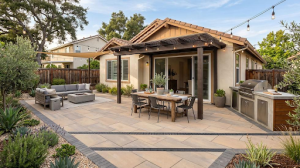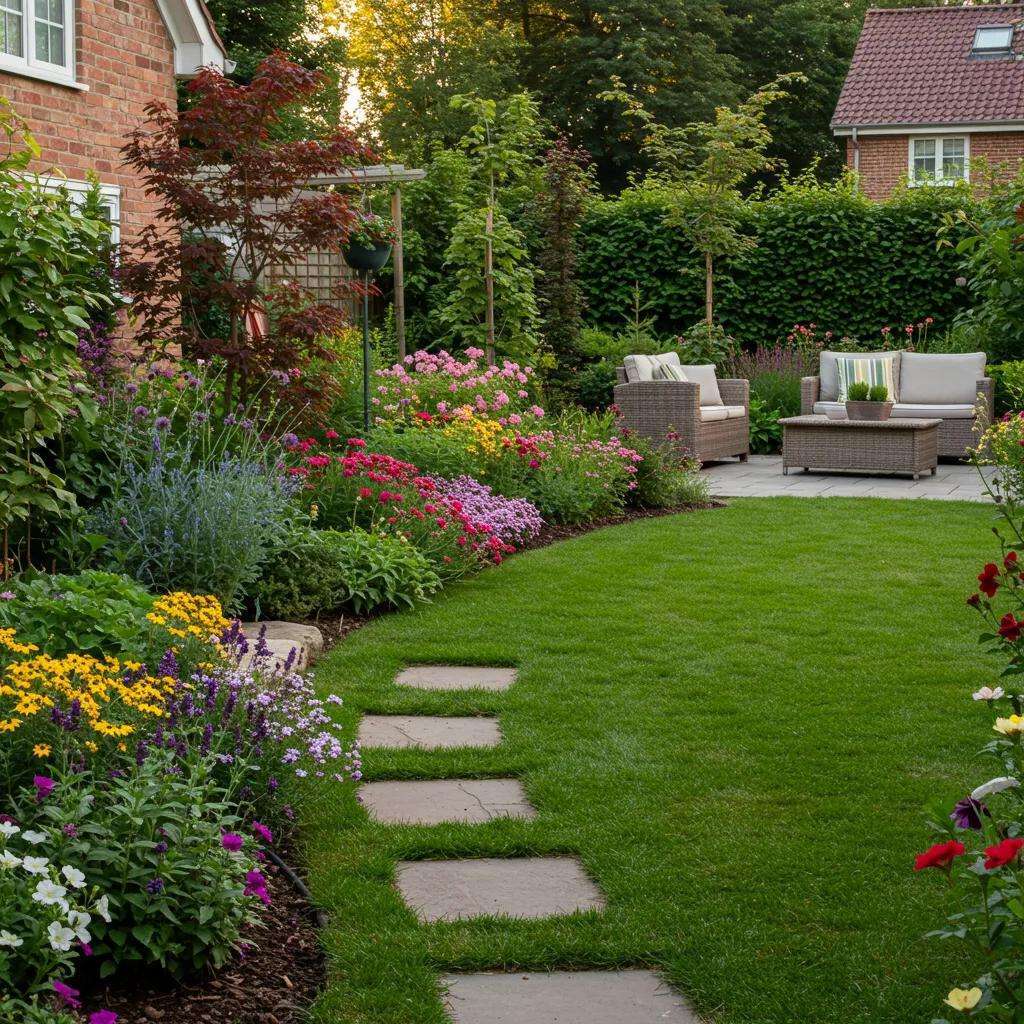
Complete Full-Service Landscaping for Residential & Commercial Clients
A complete landscape company delivers integrated landscape services that guide a property from concept through construction and ongoing care, providing a single point of accountability for design, installation, and maintenance. This article explains what full-service landscape companies do, how integrated design-build-maintenance workflows protect landscape intent, and how these services differ for residential and commercial clients. Many property owners struggle with fragmented vendors, mismatched systems, and inconsistent long-term care; understanding the full-service model solves coordination gaps and preserves investment value. Below we map core service categories, typical installation phases, seasonal maintenance programs, technical choices for irrigation and lighting, and practical evaluation criteria for selecting a vendor. Readers will get checklists, comparative tables for system choices, and examples of residential packages versus commercial service levels to help decide between an integrated provider and specialized contractors. Throughout, keywords like complete landscape company, landscape design and build, landscape maintenance services, irrigation system installation, and commercial landscaping services are woven into practical guidance for choosing and working with a turnkey landscaping partner.
What Services Does a Complete Landscape Company Provide?
A complete landscape company provides four core service categories—landscape design, landscape installation, landscape maintenance, and specialized services—each delivering distinct outcomes that together create durable, attractive outdoor spaces. The design phase produces site analysis, concept plans, planting palettes, and often 3D renderings so installations match client goals and local conditions. Installation converts plans into built elements: grading, hardscapes, plant installations, irrigation, and lighting systems coordinated for timing and durability. Maintenance sustains the original design intent through scheduled mowing, fertilization, pruning, irrigation tuning, and pest management to protect plant health and curb appeal.
| Service Category | Typical Scope | Typical Deliverables |
|---|---|---|
| Landscape Design | Planning and specification | Site analysis, concept plan, planting palette, construction drawings |
| Landscape Installation | Construction of features | Grading, hardscapes (patios, walls), plant installation, irrigation, lighting |
| Landscape Maintenance | Recurring care | Mowing, fertilization, pruning, seasonal clean-ups, irrigation checks |
| Specialized Services | Systems and seasonal programs | Irrigation installation/repair, outdoor lighting, water features, snow/ice management |
This table clarifies responsibilities so property owners can compare proposals and understand what each line item achieves. The next section explains how design outcomes translate into installation choices and long-term maintenance needs.
How Does Landscape Design Enhance Your Property?

Landscape design frames a property’s visual identity and functional use by combining site analysis, circulation planning, and plant selection into an intentional plan that increases usability and value. Designers assess microclimates, sun patterns, soil types, drainage, and client objectives to create concepts that balance aesthetics with low-maintenance choices and native planting where appropriate. Deliverables typically include conceptual diagrams, planting plans, materials specifications, and sometimes 3D visualizations that help clients preview the finished space and make informed trade-offs. Good design anticipates maintenance and irrigation requirements, reducing lifecycle costs while improving biodiversity and curb appeal.
Design decisions directly inform installation sequencing and material selection, so the next step is understanding the key components and phases of landscape installation.
What Are the Key Components of Landscape Installation?
Landscape installation executes the design through coordinated phases—site preparation, hardscaping, softscaping, system installation, and final grading—that protect constructed elements and plantings. Site preparation addresses grading, soil amendment, and drainage corrections to avoid future erosion or runoff problems, while hardscaping uses durable materials selected for load, freeze-thaw conditions, and local style. Planting includes right plant, right place choices to match sun exposure and irrigation availability; irrigation and lighting systems are installed and calibrated to integrate with plant needs and energy-conserving strategies. Typical timelines are phased to minimize disruption: demolition and prep, hardscape construction, planting and soil work, then systems and fine grading.
These installation phases set expectations about noise, access needs, and project duration, which leads naturally into what maintenance practices keep landscapes healthy year-round.
Which Maintenance Services Keep Your Landscape Healthy Year-Round?
Maintenance services ensure landscapes remain attractive and resilient through scheduled tasks that respond to seasonal needs, plant growth cycles, and system wear. Core maintenance includes mowing frequency tied to turf growth, fertilization and soil management, pruning for structural plant health, pest and disease monitoring, mulch renewal, and irrigation system checks and winterization. Seasonal programs adjust intensity and tasks: spring cleanups, summer irrigation tuning, fall aeration and fertilization, and winter protection measures for vulnerable plants. Regular maintenance extends the lifespan of hardscape features and irrigation systems while preserving design intent and minimizing costly emergency repairs.
- Routine maintenance programs typically include mowing, edging, pruning, fertilization, and seasonal cleanups.
- System maintenance includes irrigation audits, valve testing, controller programming, and lighting checks.
- Preventative services cover pest monitoring, soil health treatments, tree inspections, and winterizing tasks.
These maintenance routines protect investment and inform contracting decisions; the next subsection outlines specialized services that full-service firms commonly provide.
What Specialized Services Are Included in Full-Service Landscaping?
Specialized services extend baseline landscape work to include technical systems and seasonal programs such as irrigation system installation and repair, outdoor lighting design and retrofit, drainage solutions, water features, outdoor kitchens, and snow and ice management. Each specialty addresses discrete property needs—for example, drainage solutions correct persistent low spots and prevent foundation issues, while outdoor lighting improves safety and extends usable hours. These services often require licensed trade coordination (electrical, plumbing) and specific warranties or maintenance plans to ensure long-term function. Selecting specialized services should be driven by site conditions, intended use, and lifecycle cost analysis.
Understanding specialties helps owners prioritize investments; the following section contrasts how providers adapt these services for residential versus commercial clients.
After outlining core services, many full-spectrum providers position themselves as single-source partners offering design, installation, and maintenance for both homes and businesses. These full-spectrum landscape solutions streamline communication across phases and provide a clear path to request an estimate or project consultation when clients prefer turnkey delivery.
How Do Full-Service Landscaping Companies Serve Residential and Commercial Clients?
Full-service landscaping companies tailor scope, scheduling, and contract terms to meet residential priorities—personalized outdoor living and seasonal care—and commercial priorities—operational consistency, safety, and regulatory compliance. Residential work emphasizes design-driven outdoor living elements, phased installations to match homeowner budgets, and flexible maintenance schedules geared toward aesthetics and lifestyle. Commercial services prioritize predictable SLAs, documented work logs, liability mitigation (snow and ice management), and frequent inspections to preserve curb appeal for customers and tenants. Both segments benefit from centralized project management that coordinates subcontractors and technical systems.
Below are sample package outlines to illustrate typical residential and commercial tiers and help owners select the right level of service.
- Residential Basic Care: weekly mowing, seasonal cleanups, and minor pruning; ideal for small yards.
- Residential Complete Care: includes fertilization, aeration, seasonal plantings, and irrigation checks for medium to large properties.
- Commercial Standard Contract: scheduled mowing, landscape inspections, trash control, and lighting checks with documented reports.
- Commercial Premium Contract: includes enhanced planting, scheduled irrigation audits, and snow/ice response with specified response times.
These package examples highlight how frequency and documentation differ between segments and provide a starting point to compare proposals. The next subsection explains common residential lawn care packages in more detail.
What Residential Lawn Care Packages Are Available?
Residential lawn care packages typically scale from basic mowing to premium programs that include seasonal cultural practices and preventative treatments to maintain turf health and aesthetics. Basic packages focus on mowing, edging, and debris removal for curb appeal, while mid-tier offerings add fertilization, weed control, and two seasonal cleanups. Premium plans incorporate aeration, overseeding, soil testing, and integrated pest management for properties that prioritize lush turf and long-term health. Homeowners choose based on yard size, desired appearance, and tolerance for DIY tasks; selecting a package should align with grass type, sun exposure, and irrigation capacity.
Choosing the right package prepares a homeowner for expected visits and costs, which contrasts with commercial maintenance that emphasizes operational reliability.
How Is Commercial Property Maintenance Tailored for Business Needs?
Commercial maintenance emphasizes predictable operations, compliance, and risk reduction through documented service levels, scheduled night or early-morning windows, and dedicated staffing or crews. Contracts commonly define response times for issues, seasonal snow and ice obligations, and inspection reports to demonstrate compliance with safety and aesthetic standards. Commercial scopes often include parking lot edging, landscape bed maintenance, and prompt repair of hazardous elements to reduce liability exposure and protect tenant or customer impressions. Documentation and communication protocols—monthly reports, seasonal planning meetings—are essential to meet institutional expectations and budget planning cycles.
This operational focus informs resource allocation and service design; the next section explores outdoor living builds for homeowners and how contractors coordinate multi-trade projects.
What Outdoor Living Space Contractors Offer for Homeowners?
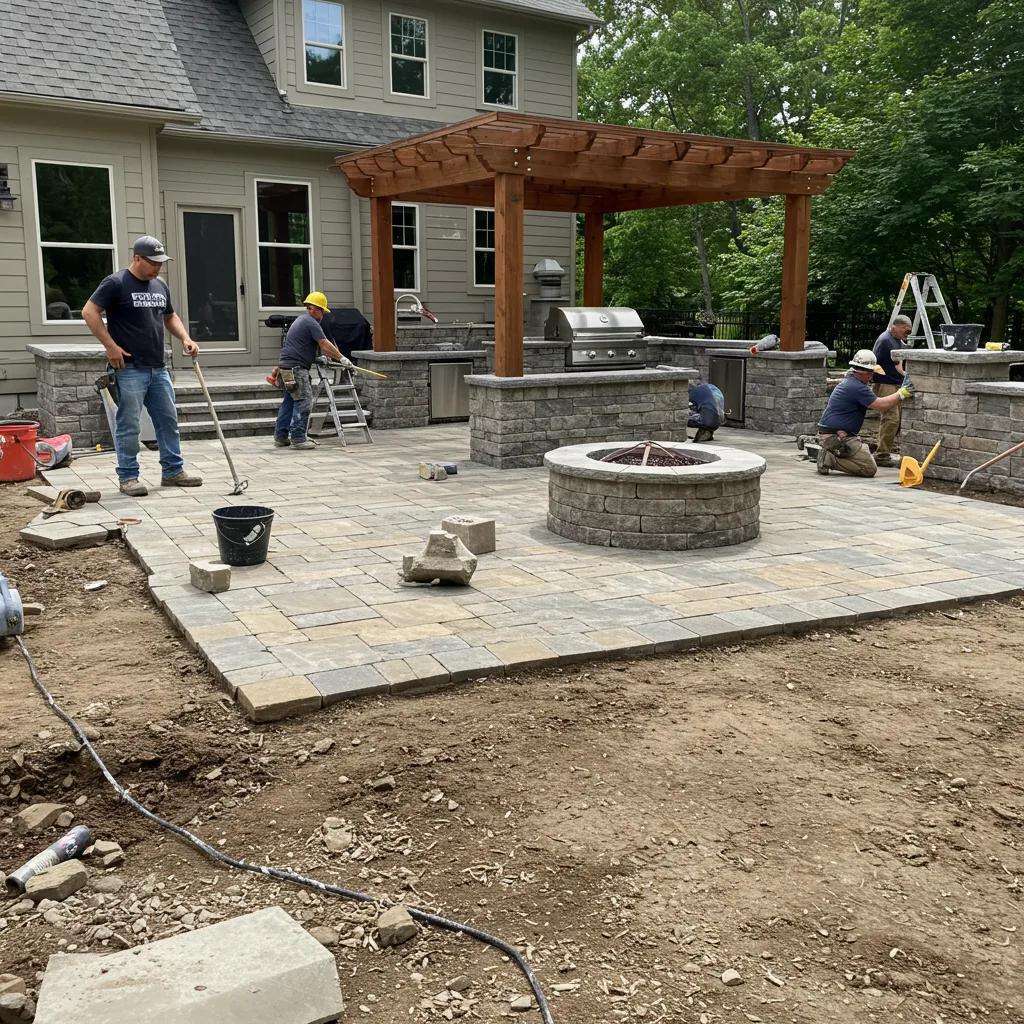
Outdoor living contractors provide turnkey construction of patios, outdoor kitchens, fire features, pergolas, and integrated systems, managing permitting, trades coordination, and phased construction to minimize homeowner disruption. Typical projects require collaboration between landscape designers, masons, electricians, and sometimes plumbers; contractors sequence work to install hardscapes first, then utilities and finishes, and finally planting and lighting to protect completed elements. Upgrades often focus on material longevity—pavers, natural stone, or cast concrete—and integrating low-voltage lighting and efficient irrigation for durability. Clear timelines, change-order protocols, and staging plans help homeowners understand cost and schedule impacts.
Coordinated project management reduces surprises and preserves the design intent; having reviewed client-focused service tiers, the next H2 explains why an integrated provider can be preferable to specialized contractors.
Why Choose a Complete Landscape Company Over Specialized Providers?
Choosing a complete landscape company offers integrated accountability, consistent design-to-maintenance continuity, and often better long-term cost predictability compared with hiring disparate specialists. A single provider reduces coordination friction, aligns systems (for example, irrigation schedules that match planting palettes), and preserves original design intent through maintenance handoffs. Integrated providers can anticipate lifecycle costs and warranty responsibilities, which simplifies dispute resolution and scheduling. For property owners seeking a cohesive outcome, the integrated model ensures that materials, systems, and maintenance plans were chosen with full lifecycle considerations rather than piecemeal decisions.
The following list summarizes core benefits to target featured-snippet-style answers for decision-minded readers.
- Single point of contact reduces scheduling conflicts and miscommunication across trades.
- Design-build continuity preserves aesthetics and prevents system mismatches that harm plantings.
- Consolidated warranties and maintenance plans simplify long-term care and budgeting.
These advantages lead directly into specifics about how integration produces efficiency and quality; the next subsection describes those benefits in actionable terms.
What Are the Benefits of Integrated Landscape Solutions?
Integrated landscape solutions combine planning, procurement, construction, and ongoing care to reduce errors, speed delivery, and lower lifecycle costs while maintaining the original design intent. Integration enables teams to sequence work optimally—avoiding rework caused by separate contractors—and to select materials and plantings compatible with local climate and maintenance regimes. This reduces plant mortality from mismatched irrigation or incorrect soil amendments and lowers total cost of ownership across years. Integrated teams can also implement sustainability measures—native planting, efficient irrigation, and low-voltage LED lighting—that deliver measurable utility and maintenance savings over time.
These efficiency gains illustrate why single-provider projects often outperform fragmented approaches; next, we examine how providers maintain consistent quality across phases.
How Does a Single Provider Ensure Consistent Service Quality?
A single provider implements standardized processes—scope checklists, quality-control inspections, and maintenance protocols—to ensure continuity from design through maintenance, with staff or subcontractors operating under common performance standards. Evidence of consistency includes documented processes, staged inspections at critical milestones, and clear warranty terms for both workmanship and installed systems. Routine handovers between construction and maintenance teams, with as-built documentation and system programming details, prevent loss of institutional knowledge. Clients should ask providers for example process documentation or descriptions of how they manage quality control during and after installation.
Understanding quality mechanisms helps buyers evaluate proposals and leads into how tailored solutions adapt to unique site needs.
How Do Tailored Solutions Address Unique Property Needs?
Tailored solutions begin with site-specific assessments—soil tests, slope analysis, and microclimate mapping—that guide plant selection, grading corrections, and material choices addressing erosion, sun exposure, and intended use. For example, a steep slope may require retaining walls, terraced planting, and specified drainage to prevent runoff; a high-traffic commercial frontage may prioritize durable paving and low-maintenance plantings. Custom solutions balance client goals with long-term maintenance realities and budget constraints, producing more resilient landscapes. Case-based problem-solving during design reduces retrofit costs and ensures longevity of both softscape and hardscape elements.
Next we explore the design-build workflow in greater detail and current trends that influence material and system choices.
How Does Landscape Design and Build Transform Outdoor Spaces?
Design-build merges creative design and construction execution within a single team to streamline decision-making, shorten timelines, and reduce cost overruns while preserving design intent through construction. The workflow typically begins with discovery and schematic design, proceeds to detailed construction documents and permitting, and concludes with construction management and commissioning of systems like irrigation and lighting. This integrated approach fosters coordination among trades, reduces change orders, and often accelerates project completion. The transformation from concept to built environment results in usable outdoor living areas, improved site function, and measurable increases in property utility.
Below we cover current trends in landscape design that inform material and system selection, followed by hardscaping benefits and the role of specialty amenities.
What Are the Latest Trends in Landscape Design?
Recent trends emphasize sustainability, native planting, low-maintenance landscapes, integrated outdoor living, and smart systems such as soil moisture sensors and automated controllers. Native and drought-tolerant plant palettes reduce irrigation demand and support local ecology while lowering ongoing maintenance burdens. Outdoor kitchens, fire features, and multi-season seating areas extend usable space and increase property value when designed with weather-appropriate materials. Smart irrigation and LED low-voltage lighting permit remote programming and measurable resource savings, aligning aesthetics with performance objectives.
Trends inform material selection and system integration, which leads into how hardscaping choices affect functionality and aesthetics.
How Do Hardscaping Features Enhance Functionality and Aesthetics?
Hardscaping elements—patios, walkways, retaining walls, and steps—structure outdoor spaces, control erosion, and create durable entertainment areas that reduce turf footprint and maintenance needs. Material choices range from permeable pavers to natural stone and cast concrete; each option carries different maintenance profiles, slip resistance, and lifecycle costs. Permeable systems enhance stormwater management, while heavier natural stone conveys timeless character and high durability. Proper subgrade preparation and jointing materials are critical to long-term performance and reduce future repair costs.
Well-designed hardscapes extend usable space and require planned maintenance; the following subsection reviews experiential features like water elements and outdoor kitchens.
What Role Do Water Features and Outdoor Kitchens Play in Outdoor Living?
Water features and outdoor kitchens transform functional landscapes into lifestyle environments by adding sensory appeal and social gathering opportunities while requiring careful integration with electrical, plumbing, and filtration systems. Water features—fountains, ponds, and cascades—need filtration and winterization plans to prevent algae growth and freeze damage, while outdoor kitchens require gas, electrical, and drainage coordination and durable materials that resist weathering. These features typically increase usable living area and can boost resale value, but they add operational costs for maintenance and utilities that should be considered during planning. Thoughtful integration with lighting and seating areas completes the user experience and maximizes return on investment.
After design-build considerations, the next major topic covers essential maintenance services necessary to preserve the investment over time.
What Are the Essential Maintenance Services Offered by a Complete Landscape Company?
A complete landscape company offers core recurring maintenance and seasonal programs designed to preserve plant health, system performance, and aesthetic value across the year. Essential services include routine mowing and turf care, fertilization and soil amendments, pruning and plant health monitoring, irrigation system audits and repairs, lighting maintenance, pest and disease control, and seasonal tasks such as leaf cleanup and winterization. For commercial clients, snow and ice management is often central to continuity and liability protection. Maintenance plans are structured around site-specific needs, plant palettes, and service frequency to deliver predictable appearance and performance.
Below is a seasonal-focused breakdown and checklist for core maintenance areas to help owners compare bids and set expectations.
- Spring: cleanup, mulch refresh, plant health assessment, irrigation startup and calibration.
- Summer: irrigation scheduling, pest scouting, targeted fertilization, canopy pruning where needed.
- Fall: aeration, overseeding, leaf management, irrigation winter checks, plant protection measures.
- Winter: system winterization, storm response planning, snow and ice contract activation for commercial sites.
This seasonal checklist informs scope negotiation and transitions into specifics on lawn care adaptations by season.
How Is Lawn Care Customized for Different Seasons?
Seasonal lawn care tailors treatments to grass type and climate: spring emphasizes cleanups, early fertilization, and pre-emergent weed control; summer focuses on irrigation efficiency, mowing height adjustments, and insect monitoring; fall targets aeration, overseeding, and nutrient replenishment to strengthen turf; and winter preparation includes lowering irrigation pressure and protecting delicate plantings. Timing and product selection vary by grass species and local weather patterns, so effective programs rely on soil tests and historical climate data. Consistent seasonal interventions reduce the need for restorative, high-cost repairs and support year-round appearance.
Seasonal lawn care feeds into tree and shrub care services that protect larger landscape assets, described next.
What Tree and Shrub Care Services Are Provided?
Tree and shrub care includes pruning for structure and health, disease and pest management, fertilization, and hazard mitigation such as cable bracing or emergency removal when necessary. Certified arboricultural assessments determine pruning schedules and identify signs—cracks, fungal growth, dieback—that indicate professional intervention. Preventative treatments and early detection reduce the risk of limb failure and expensive emergency work; recommendations often include mulching, root protection during construction, and targeted fertilization. Service frequency depends on species, age, and site conditions, with routine inspections forming part of comprehensive maintenance plans.
Protecting commercial operations during winter relies on snow and ice services, which we discuss next.
How Do Snow and Ice Management Services Protect Commercial Properties?
Snow and ice management programs protect commercial properties through preventative planning, timely response, and contractually defined service levels that reduce slip-and-fall risk and business interruption. Services typically include pre-treatment where appropriate, plowing, shoveling of pedestrian areas, de-icing and sanding, and coordinated response plans tied to weather triggers in service agreements. Commercial contracts specify response times, defined service areas, documentation, and liability considerations to align with insurance and safety requirements. Reliable snow and ice management preserves access and minimizes customer and employee hazards, making it a critical component of year-round landscape service for many businesses.
Next we examine irrigation and lighting systems—the technical choices that significantly affect efficiency and appeal.
How Do Irrigation Systems and Outdoor Lighting Improve Landscape Efficiency and Appeal?
Irrigation systems and outdoor lighting are technical investments that enhance plant health, conserve water, extend usable hours for outdoor spaces, and improve safety and security when properly specified and maintained. Efficient irrigation—drip systems, smart controllers, rain sensors—targets water where and when needed to reduce waste and prevent overwatering, while outdoor lighting uses low-voltage LED technology and thoughtful placement to highlight paths, entrances, and focal points. These systems require calibrated installation, seasonal tuning, and periodic audits to preserve efficiency and aesthetic effect. The following table compares common irrigation types for quick decision-making.
| System Type | Installation Complexity | Water Savings | Maintenance Needs |
|---|---|---|---|
| Spray/Sprinkler | Moderate | Moderate | Regular nozzle checks, seasonal blowouts |
| Drip Irrigation | Higher (layout) | High | Filter cleaning, emitter checks |
| Smart Irrigation (controllers, sensors) | Higher (programming) | Very High | Firmware updates, sensor calibration |
This table helps property owners weigh upfront cost against long-term water savings and maintenance requirements. Next we detail specific irrigation system types and their use cases.
What Types of Irrigation Systems Are Installed and Maintained?
Common irrigation options include traditional spray sprinkler systems for turf, drip irrigation for planting beds and shrub lines, and smart controllers with weather or soil-moisture sensors that adapt schedules automatically. Spray systems work well for even turf coverage but can waste water through evaporation or overspray; drip systems deliver water directly to root zones, reducing waste and improving plant health. Smart systems layer control logic that adjusts runtime based on recent weather or moisture data, delivering strong water savings and compliance with local restrictions. Installation choice should reflect plant types, slope, and water source constraints.
Choosing efficient systems depends on conservation goals and maintenance capabilities, which brings us to how efficient irrigation conserves water in practice.
How Do Efficient Irrigation Systems Conserve Water?
Efficient irrigation conserves water by matching delivery method to plant needs, using low-flow emitters, pressure regulation, timed schedules, and feedback from soil moisture sensors or local weather data to avoid unnecessary cycles. Drip systems can reduce landscape water use by up to 30–60% compared with spray systems in appropriate contexts, while smart controllers typically cut runtime by adjusting schedules following precipitation events. Regular maintenance—checking for leaks, clogged emitters, and proper pressure—sustains efficiency gains year-round. Combining plant selection with irrigation upgrades yields the largest sustained water savings on a property.
Conserving water complements lighting upgrades that save energy while enhancing safety, discussed next.
What Outdoor Lighting Options Enhance Safety and Ambiance?
Outdoor lighting options include path and step lighting for safety, spot and accent lighting for focal elements, and ambient fixtures for general use, with LED low-voltage systems providing energy-efficient performance and long service life. Proper fixture placement reduces glare and preserves nighttime visibility while accenting architectural and landscape features; control options include timers, photocells, and smart controls for scheduling. Low-voltage LED systems minimize maintenance with long lifespans and lower energy draw, though transformers and wiring should be inspected periodically. Thoughtful lighting design balances brightness, color temperature, and placement to achieve both safety and aesthetic goals.
The next section provides practical criteria to evaluate any prospective complete landscape company, with a checklist table to guide decisions.
How Can You Evaluate a Complete Landscape Company’s Expertise and Portfolio?
Evaluating a complete landscape company requires reviewing portfolios for clear problem statements and outcomes, verifying certifications and insurance, checking warranties and maintenance terms, and seeking documented service standards. Important evaluation attributes include before/after photos with scope descriptions, client references, proof of appropriate licensing and insurance, staff qualifications for specialized work (e.g., certified arborists), and clear warranty and maintenance policies. Asking for as-built documentation and maintenance schedules demonstrates whether a provider plans for lifecycle care. The table below summarizes evaluation attributes and what to look for in each area.
| Attribute | What to Check | What It Indicates |
|---|---|---|
| Portfolio | Before/after photos, scope, timelines | Demonstrates capability and project variety |
| Certifications | Trade associations, licenses | Validates technical competence and compliance |
| Warranties | Coverage terms for workmanship/systems | Shows accountability and risk allocation |
| Service Area & SLAs | Documented response times | Demonstrates operational reliability |
| Insurance | Liability & worker coverage | Reduces client liability exposure |
This checklist table helps buyers compare firms objectively and reduces selection risk. The following subsections expand on portfolio review, testimonials, and certifications.
What Should You Look for in Case Studies and Project Portfolios?
When reviewing case studies and portfolios, look for clear problem statements, the scope of work, documented solutions, timelines, and measurable outcomes such as reduced water use or improved planting survival rates. High-quality portfolios include annotated photos showing before/after conditions, material callouts, and notes on site constraints or innovations. Diversity of project types—residential hardscape, commercial campus, irrigation retrofits—indicates adaptability, while consistent attention to detail and follow-through suggests robust project management. Ask providers for contactable references for projects similar in scale and complexity to yours.
Portfolio quality signals process maturity and informs follow-up questions when considering proposals.
How Do Customer Testimonials Reflect Service Quality?
Customer testimonials indicate service experience when they include specifics—project scope, timelines, communication, and measurable outcomes—rather than generic praise. Verify testimonials by requesting project details or references, noting dates and project descriptions to confirm relevance. Ask references about responsiveness, adherence to budgets, and post-installation follow-through to assess long-term service quality. Cross-check testimonials against portfolio evidence and documentation such as maintenance schedules or service logs for a fuller picture.
Authentic testimonials combined with verifiable references reduce selection uncertainty and lead naturally to credential verification.
What Certifications and Experience Validate Professional Expertise?
Relevant credentials include licensed contractor classifications where applicable, membership in industry trade associations, certified arborist credentials for tree work, and documented safety training for crews handling heavy equipment or chemical applications. Insurance certificates—general liability and workers’ compensation—are essential to reduce client exposure. Experience should be demonstrated through diverse project types and documented processes such as maintenance plans and quality-control checklists. Certifications and transparent processes signal professionalism and reduce project risk.
After assessing expertise, consider requesting a consultation and portfolio review to finalize vendor selection; a single prompt can clarify fit and next steps.
Stronger integration point: If you’re ready to evaluate proposals, request a consultation or portfolio review from full-spectrum providers that supply as-built documentation, warranty terms, and maintenance plans; a focused consultation helps align scope, timeline, and budget without committing to a contractor.